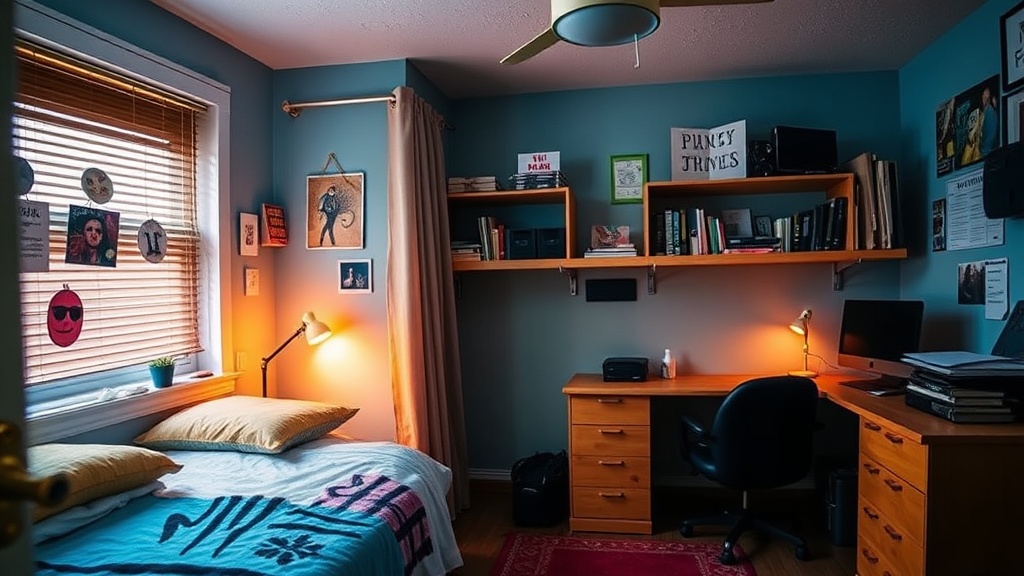
10 Dorm Room Hacks Every College Student Needs to Survive

Use Bed Risers to Create Hidden Storage Space
Command Hooks Are Your Best Friend for Everything
Invest in a Quality Desk Lamp with USB Charging
Create a DIY Whiteboard Calendar from a Picture Frame
Hang a Shoe Organizer for Snacks and Supplies
Dorm life throws curveballs. Limited space, shared bathrooms, and tight budgets demand creative solutions. This post covers ten practical hacks—from storage tricks to study setups—that'll make a cramped dorm room feel more functional and less chaotic. Whether moving into a triple at UCLA or a single at a small liberal arts college, these tips work.
How Do You Maximize Storage in a Tiny Dorm Room?
Vertical space is the answer. Most dorm rooms offer about 120 square feet (often less), so thinking upward instead of outward changes everything.
Start with bed risers—the Dorel Home Products Bed Risers lift a standard twin bed eight inches, creating enough clearance for under-bed storage bins. The IKEA SAMLA bins (22 gallons) slide perfectly underneath and hold winter clothes, extra bedding, or snack stashes.
Over-the-door organizers aren't just for shoes. The SimpleHouseware Over Door Organizer has 24 clear pockets—use them for toiletries, cleaning supplies, charging cables, or even packaged food. One student at Ohio State turned hers into a "pantry" after the communal kitchen fridge filled up by week two.
Command hooks (3M Command Strips—get the 20-pound capacity ones) mount on cinder block walls without damage. Hang backpacks, towels, robes, or string lights. Pro tip: the hooks peel off clean at move-out, which matters when schools like Michigan charge $25 per wall mark.
Here's the thing about closet space—it's never enough. A hanging closet organizer (the Honey-Can-Do 8-Shelf Hanging Organizer) doubles shelf space instantly. Roll clothes instead of folding; you'll fit 40% more and see everything at a glance.
What's the Best Way to Set Up a Study Space in a Dorm?
The desk that comes with your room—usually 24 by 48 inches—can work, but not without intention. Most students make the mistake of treating it as a dumping ground for mail, laundry, and random tech.
First, invest in a monitor arm or laptop stand. The Amazon Basics Laptop Stand ($25) improves screens to eye level, which prevents the neck strain that hits around midterms. Pair it with an external keyboard—the Logitech K380 connects to three devices and switches between laptop, tablet, and phone with one button.
Lighting matters more than people think. Dorm overhead lighting is fluorescent and harsh. A desk lamp with adjustable color temperature—the BenQ ScreenBar clips onto monitors and reduces glare—helps maintain focus during late-night study sessions without keeping a roommate awake.
Cable management isn't aesthetic fluff; it's sanity preservation. The J Channel Cable Raceway (six-pack for $12) sticks under the desk and corrals charger cords, HDMI cables, and power strips. Label every cord with masking tape—sounds excessive until you're crawling under the desk at 11 PM trying to find the right plug.
| Study Setup Component | Budget Option | Worth-the-Investment Option |
|---|---|---|
| Laptop Stand | Amazon Basics ($25) | Rain Design mStand ($40) |
| Keyboard | Logitech K380 ($40) | Keychron K2 ($89) |
| Desk Lamp | TaoTronics LED ($20) | BenQ ScreenBar ($99) |
| Cable Management | Velcro Straps + Raceway ($10) | BlueLounge CableBox ($35) |
How Can You Make Dorm Food Actually Edible?
The dining hall gets old by October. A mini-fridge and microwave combo—strategically stocked—saves money and midnight hunger.
The Danby 4.4 Cu. Ft. Mini Fridge fits under most lofted beds and has a separate freezer compartment (critical for ice cream and frozen veggie burgers). Pair it with a BLACK+DECKER EM720CB7 microwave—700 watts, compact, and it won't trip the circuit breaker like the 1100-watt models.
Ramen isn't a punchline; it's a base. Add frozen peas, a soft-boiled egg (six minutes in the microwave with water), and Sriracha or Chili Crisp—suddenly it's a meal. Keep a small spice kit: garlic powder, red pepper flakes, everything bagel seasoning. The FDA's food safety guidelines for college students recommend keeping perishables below 40°F—get a fridge thermometer, they're $5.
A single-serve coffee maker (the Keurig K-Mini) pays for itself in two weeks if you're a daily coffee drinker. Buy reusable K-cups and bulk coffee grounds—saves about $40 monthly versus coffee shop runs. Worth noting: some dorms ban hot plates and toaster ovens (fire hazard), but electric kettles are usually allowed. The Chefman Electric Kettle boils water for oatmeal, instant noodles, or French press in three minutes.
What's the Most Overlooked Dorm key?
First-aid and wellness supplies. Not glamorous, but the student health center has lines out the door during flu season—and they're not open at 2 AM when a headache hits.
Build a kit: ibuprofen, acetaminophen, antacids (dining hall food is heavy), bandages, antibiotic ointment, thermometer, and a Purell hand sanitizer pump for the desk. Add a CDC-recommended handwashing guide printout—sounds silly until half the floor is sick with norovirus.
A basic tool kit matters too. The Apollo Tools DT9706 has a hammer, screwdrivers, pliers, and a tape measure. You'll use it more than expected—assembling furniture, fixing a loose drawer, hanging decor without destroying walls.
How Do You Sleep Better in a Dorm?
Shared living means noise. Earplugs help, but noise-canceling headphones—the Sony WH-1000XM4 (or the cheaper Soundcore Life Q30 at $80)—block out hallway chatter and roommate Netflix binges.
Light is the other enemy. Dorm windows usually have cheap blinds that don't close fully. A sleep mask (the Mavogel Cotton Sleep Mask, $10) or blackout curtains (clip them to existing blinds with binder clips—hack of the century) creates darkness that signals melatonin production.
The mattress situation is rough—most are vinyl-covered, thin, and older than the students sleeping on them. A mattress topper isn't optional; it's survival. The Linenspa 3-Inch Gel Infused Memory Foam Topper transforms concrete-like dorm beds into something resembling comfort. Add a mattress protector (bed bugs are real, and washing the protector is easier than dealing with an infestation).
How Do You Keep a Dorm Room Clean Without Effort?
Small spaces get messy fast. The solution: systems, not willpower.
A handheld vacuum—the BLACK+DECKER dustbuster—handles crumbs, glitter, and the mysterious debris that accumulates. Keep it charged and within arm's reach of the desk; out of sight means out of mind, and out of mind means filthy.
Microfiber cloths (the Amazon Basics 48-Pack) and a spray bottle of all-purpose cleaner (Method All-Purpose Cleaner, French Lavender scent is popular) make wiping surfaces a 30-second task. Do it while the coffee brews.
The catch? Laundry. Most freshmen underestimate how much time it consumes. A laundry backpack—the HOMEST Laundry Bag with Straps—carries two weeks of clothes without ripping (plastic bags break, always). Set a phone alarm for transfer time; forgotten loads get moldy or stolen.
How Do You Stay Comfortable in a Dorm with No AC?
Many older dorms—especially at state schools in the Midwest and Northeast—lack air conditioning. August move-in and May move-out can be brutal.
A fan isn't optional. The Vornado 460 Air Circulator moves air 70 feet and runs quieter than box fans (roommates appreciate this). Position it across from an open window to create cross-breeze.
Cooling towels—Frogg Toggs Chilly Pad—lower body temperature instantly. Soak, wring, snap, and drape around your neck during study sessions. They work for 2-3 hours before needing a re-soak.
Sheets matter more than expected. Cotton percale feels cooler than microfiber. The Brooklinen Classic Core Sheet Set (investment) or Target Threshold Performance Sheets (budget) both breathe better than the cheap polyester sets sold in August "dorm kits."
How Do You Personalize Without Losing Your Deposit?
Walls are cinder block or painted concrete. Nails are forbidden. Posters look like freshman year (nothing wrong with that, but options exist).
Removable wallpaper—Tempaper or RoomMates Peel and Stick—covers ugly walls and peels off clean. One accent wall behind the bed transforms the whole room.
Photos without frames: use washi tape (comes off walls damage-free) or print photos on Canon Matte Photo Paper and attach with sticky tack. The Department of Education's cost of attendance breakdown reminds students that dorm decor isn't financial aid-eligible—budget accordingly.
Plants (real or excellent fakes from Target's Threshold line) add life. Real options that survive dorm conditions: pothos, snake plants, ZZ plants. They tolerate low light and irregular watering—perfect for busy students.
How Do You Manage Shared Bathroom Chaos?
Communal bathrooms—whether floor-wide or suite-style—require a strategy.
The shower caddy should be plastic mesh (drains water) with a handle (the InterDesign Orbz Shower Tote). Metal rusts. Solid plastic collects mildew. Keep it stocked and ready to grab; nothing worse than realizing mid-shampoo that the conditioner is back in the room.
Shower shoes are non-negotiable. The slide sandals from Adidas or Nike ($25-35) work better than flip-flops (they stay on wet feet). Pack two pairs of towels minimum—one in use, one clean backup. Towels take 24+ hours to dry in humid dorms.
A small bin under the sink (if you're lucky enough to have one) corrals toiletries. Label everything; "borrowed" items have a way of walking off in shared spaces.
That said, the best bathroom hack is timing. Most students shower 8-9 AM and 10-11 PM. A 7 AM or 2 PM shower means hot water, privacy, and no line for the mirror.
How Do You Handle the Emotional Side of Dorm Life?
The practical hacks matter, but so does mental setup. Homesickness hits differently for everyone—sometimes day three, sometimes Thanksgiving break.
Create rituals that anchor the space. A specific playlist while organizing the desk. Saturday morning coffee from that Keurig. Tuesday calls home at 6 PM. These rhythms turn a temporary room into something steadier.
Keep one framed photo—actual frame, not digital—of people who matter. When the Wi-Fi crashes during finals or the loneliness spikes, analog connection grounds you.
Build relationships with the RA (Resident Advisor) early. They're not the enemy—they're students too, usually upperclassmen who chose this job. A good RA knows the quiet study spots, which dining hall stations are actually edible, and how to handle roommate conflicts before they explode.
Finally, accept that the room won't look like a Pinterest board. Some weeks it'll be messy. Some nights you'll eat cereal for dinner standing at the mini-fridge. The hacks help, but grace helps more—yours and the grace extended by roommates handling the same compressed, chaotic, occasionally wonderful experience of learning to live away from home.