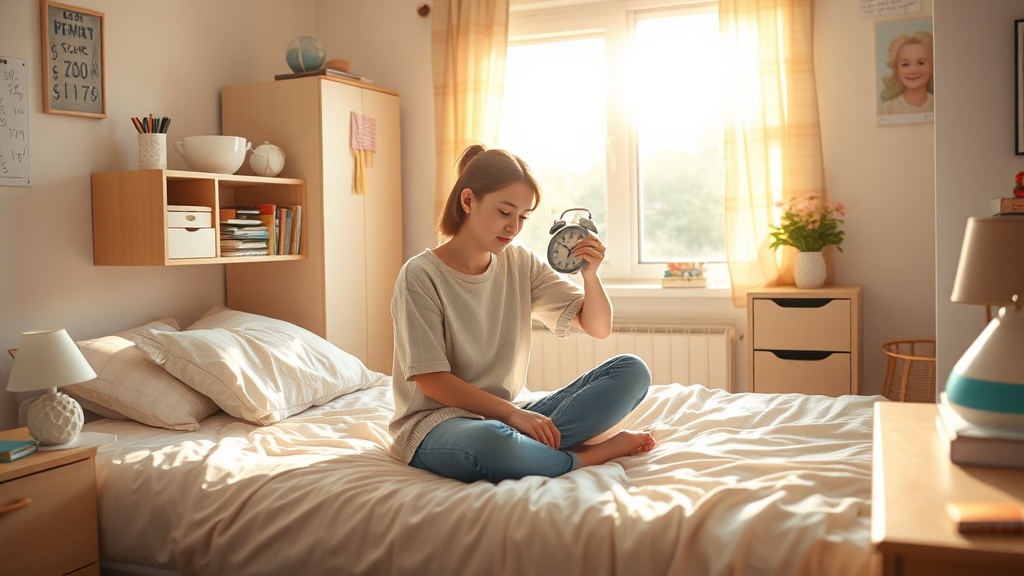
How to Adjust Your College Routine for Better Sleep and Productivity After Daylight Saving

Hook
Ever felt like you lost an hour of sleep and your brain suddenly hit the snooze button on every lecture? That’s the spring‑forward effect of daylight‑saving time, and it can throw off even the most disciplined college schedule.
Context
For students, that lost hour isn’t just a minor inconvenience—it can mean groggier mornings, slower reaction times on exams, and a dip in overall productivity. The good news? You can proactively steer your sleep‑wake cycle back on track with a few science‑backed tweaks.
What Does the Clock Change Actually Do to My Sleep?
A 2015 study in the Journal of Clinical Sleep Medicine found that after the spring shift, students were significantly sleepier, had slower reaction times, and showed reduced attentiveness during morning classes【https://pubmed.ncbi.nlm.nih.gov/26317362/】. The one‑hour loss disrupts your circadian rhythm, delaying melatonin release and making it harder to fall asleep at night.
How Can I Reset My Internal Clock in Just a Few Days?
1. Gradually Shift Bedtime Before the Change
Starting three nights before the switch, go to bed 15 minutes earlier each night. This small adjustment eases the transition without feeling like a drastic schedule overhaul.
2. Prioritize Morning Light Exposure
Natural light is the strongest cue for resetting circadian rhythms. Spend at least 20‑30 minutes outside (or by a bright window) within an hour of waking. If the weather’s gloomy, a full‑spectrum light box works just as well.
3. Limit Evening Blue Light
Blue‑light from phones, laptops, and LED lights suppresses melatonin. Use night‑mode settings after 9 pm and consider a blue‑light‑blocking app like f.lux or the built‑in iOS/Android filters.
4. Keep Your Sleep Environment Consistent
A dark, cool (≈65 °F) bedroom signals your body it’s time to wind down. Blackout curtains, a white‑noise machine, and a consistent room temperature help you fall asleep faster, even if the external clock jumps forward.
5. Use Short Naps Strategically
If you’re still feeling sluggish, a 10‑20 minute power nap in the early afternoon can boost alertness without compromising nighttime sleep.
How Do These Changes Translate to Better Academic Performance?
Research from the American Academy of Sleep Medicine links adequate sleep (7‑9 hrs) with higher GPA and better memory consolidation. By proactively managing light exposure and bedtime, you safeguard those cognitive benefits during the DST transition.
Real‑World Example
In my own sophomore spring, I followed the 15‑minute bedtime shift and morning sunlight routine. I noticed my lecture focus improved within two days, and I still hit my target of 7.5 hours of sleep each night.
Quick Checklist to Spring Forward Smoothly
- Set alarm for the new time the night before.
- Adjust bedtime 15 min earlier for three nights.
- Get morning sunlight (or light‑box) for 20 min.
- Switch devices to night mode after 9 pm.
- Keep bedroom dark, cool, and quiet.
- If needed, take a 10‑min power nap before 3 pm.
Related Reading
- Bio‑Harmony: Crafting a College Routine That Syncs with Your Circadian Rhythm – Dive deeper into aligning study sessions with natural energy peaks.
- The 45‑Minute Sunday Study Reset – A quick weekly ritual to keep your workload manageable.
- The Mid‑Semester Reset: How to Recover When You’re Already Behind – Strategies for when the DST shift throws you off course.
- Everything I Wish I Knew Before Freshman Year – General survival tips for new college students.
Takeaway
Daylight‑saving time doesn’t have to be a productivity nightmare. By shifting bedtime gradually, soaking up morning light, dimming evening screens, and keeping your sleep space consistent, you’ll stay sharp, maintain your grades, and avoid that dreaded “spring‑time fatigue.”
Set your alarm, get that sunrise, and own the extra hour of daylight—your future self will thank you.
<meta.faqs>
[
{"question": "Why does daylight saving time affect my sleep?", "answer": "The one‑hour shift disrupts your circadian rhythm, delaying melatonin release and making it harder to fall asleep at night."},
{"question": "How many minutes should I adjust my bedtime before the clock change?", "answer": "Start 15 minutes earlier each night for three nights leading up to the shift."},
{"question": "Can I use a light box if it’s still dark in the morning?", "answer": "Yes—20‑30 minutes of bright, full‑spectrum light mimics sunrise and helps reset your internal clock."}
]
</meta.faqs>